UIS Visa app
role
Product Designer
deliverables
UX/UI Design · Responsive Web App
User Flows · Information Architecture Dashboard · AI Assistant · Design System
A digital visa application platform designed to simplify the Australian immigration journey.
The chalenge
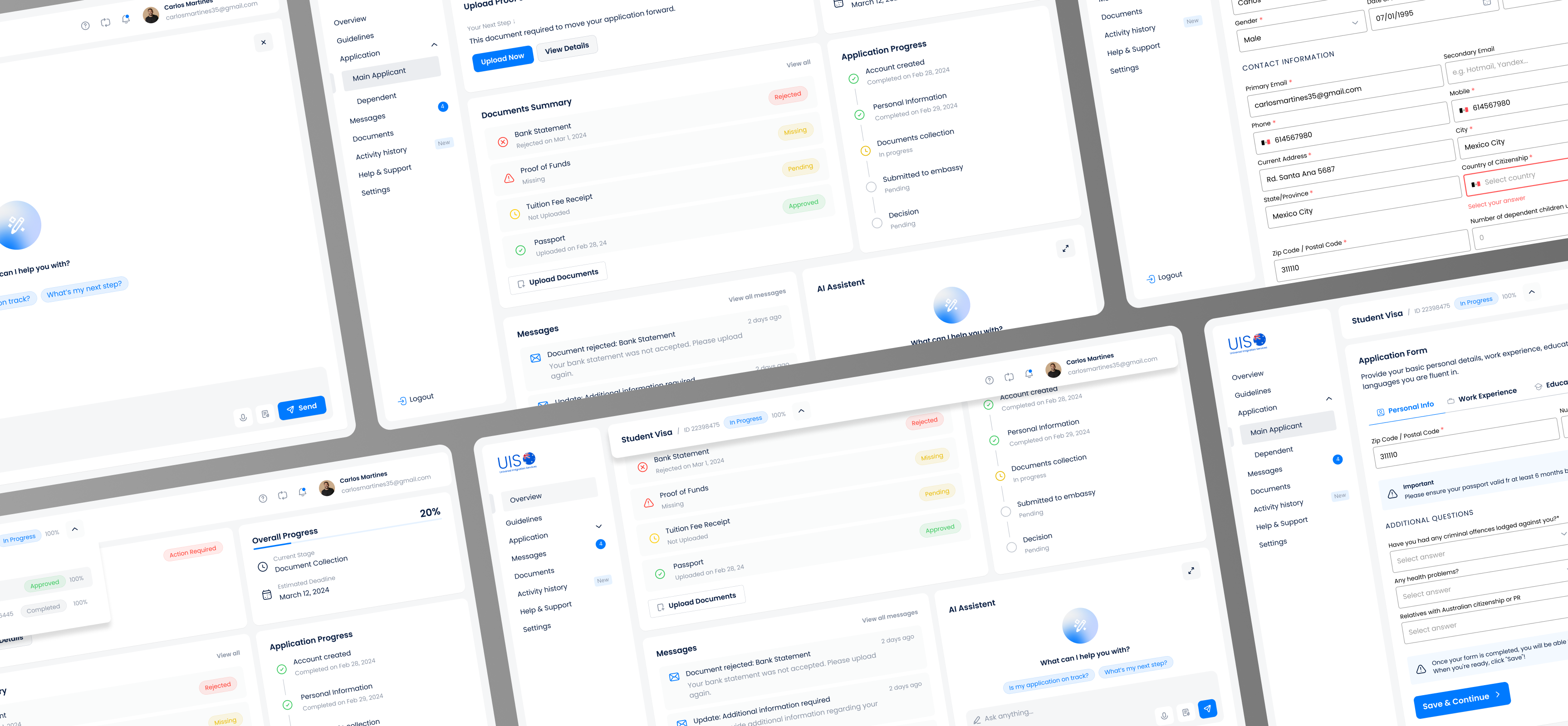
The goal was to create a centralized visa application platform that makes a complex immigration process easier to understand and manage. Clients needed a simple way to complete forms, upload and track documents, and stay informed about their application without missing important requirements.
For the company, the platform aimed to reduce manual communication, minimize incomplete submissions, and give the team better visibility into each application.
Structuring
the experience
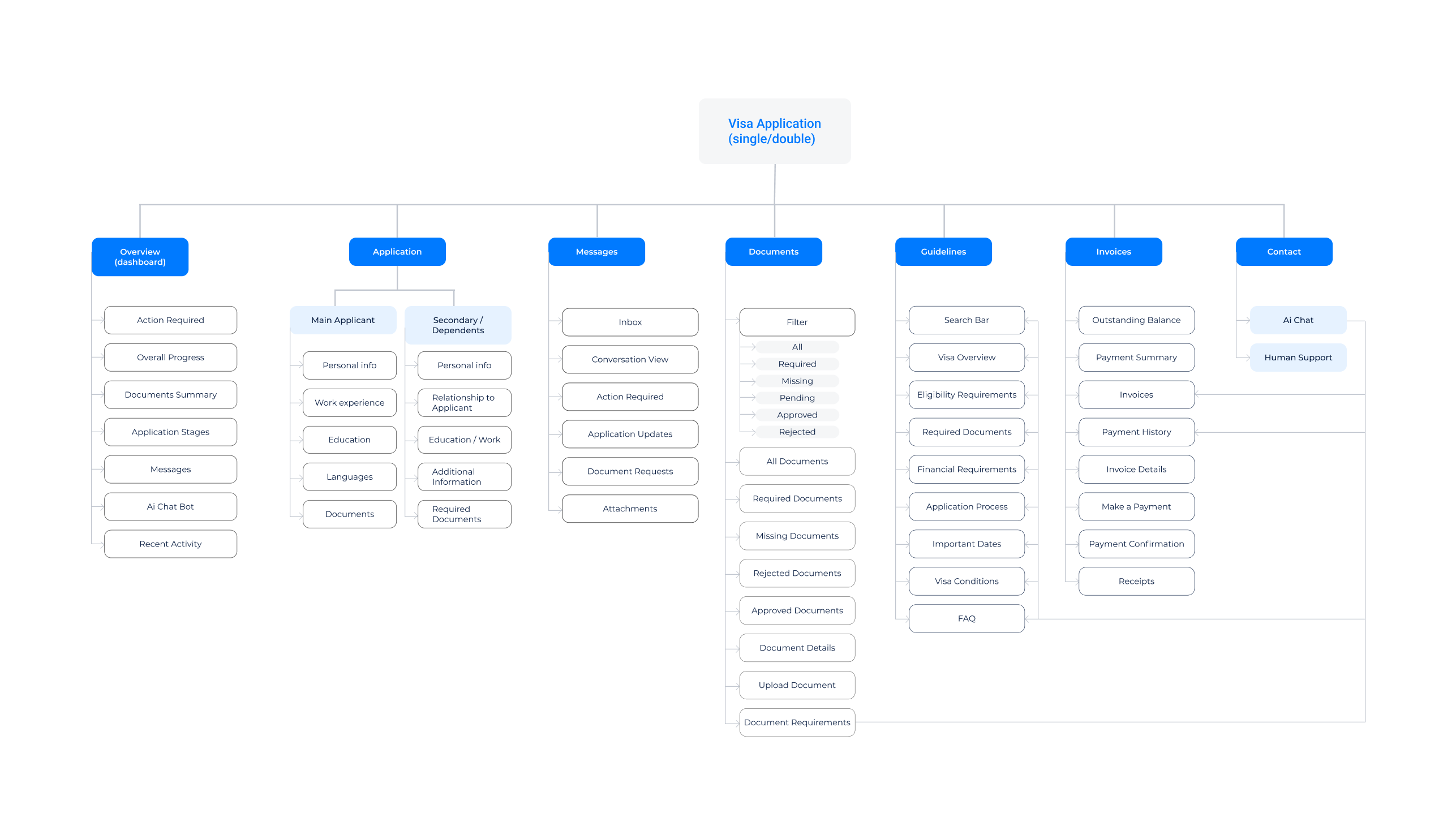
The experience was structured around the key stages of the visa process, from completing an application and submitting documents to tracking progress, receiving updates, making payments, and getting support. The information architecture keeps the dashboard as the central point of orientation while connecting each task to a clear destination.
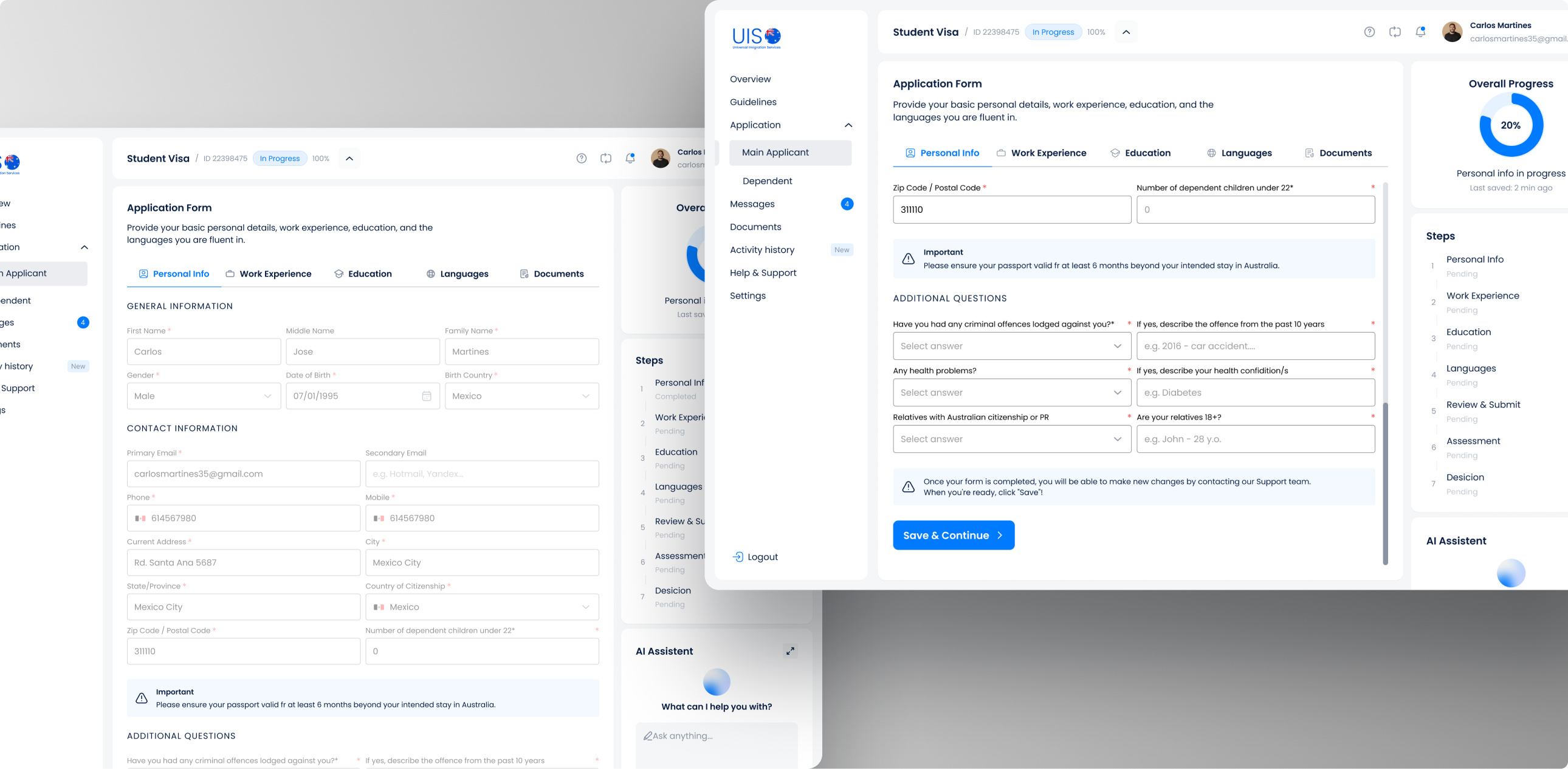
Turning complex requirements into manageable steps
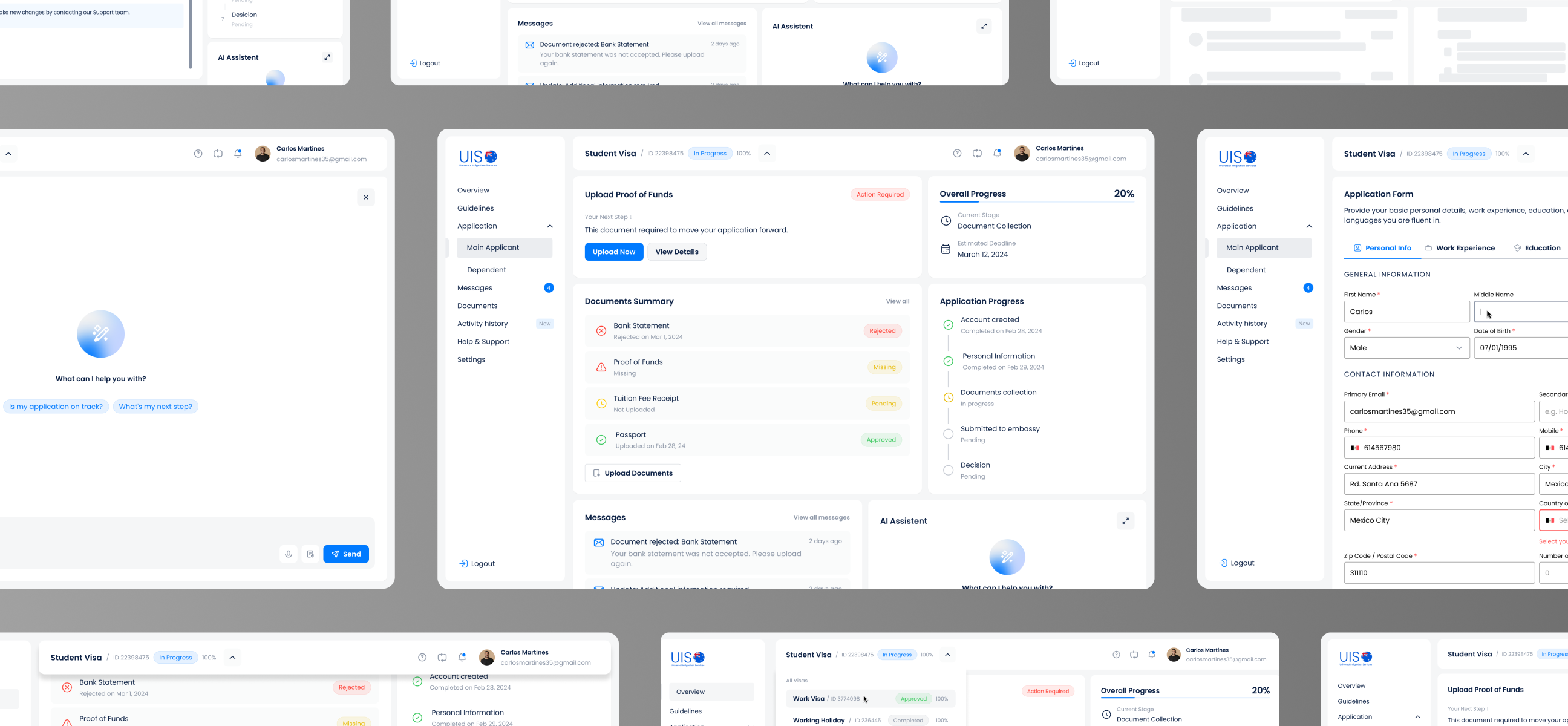
The application experience breaks a large visa form into clear sections for personal information, work experience, education, languages, and documents. Progress indicators and structured navigation make it easy to understand what information is required, what has been completed, and what remains before submission.
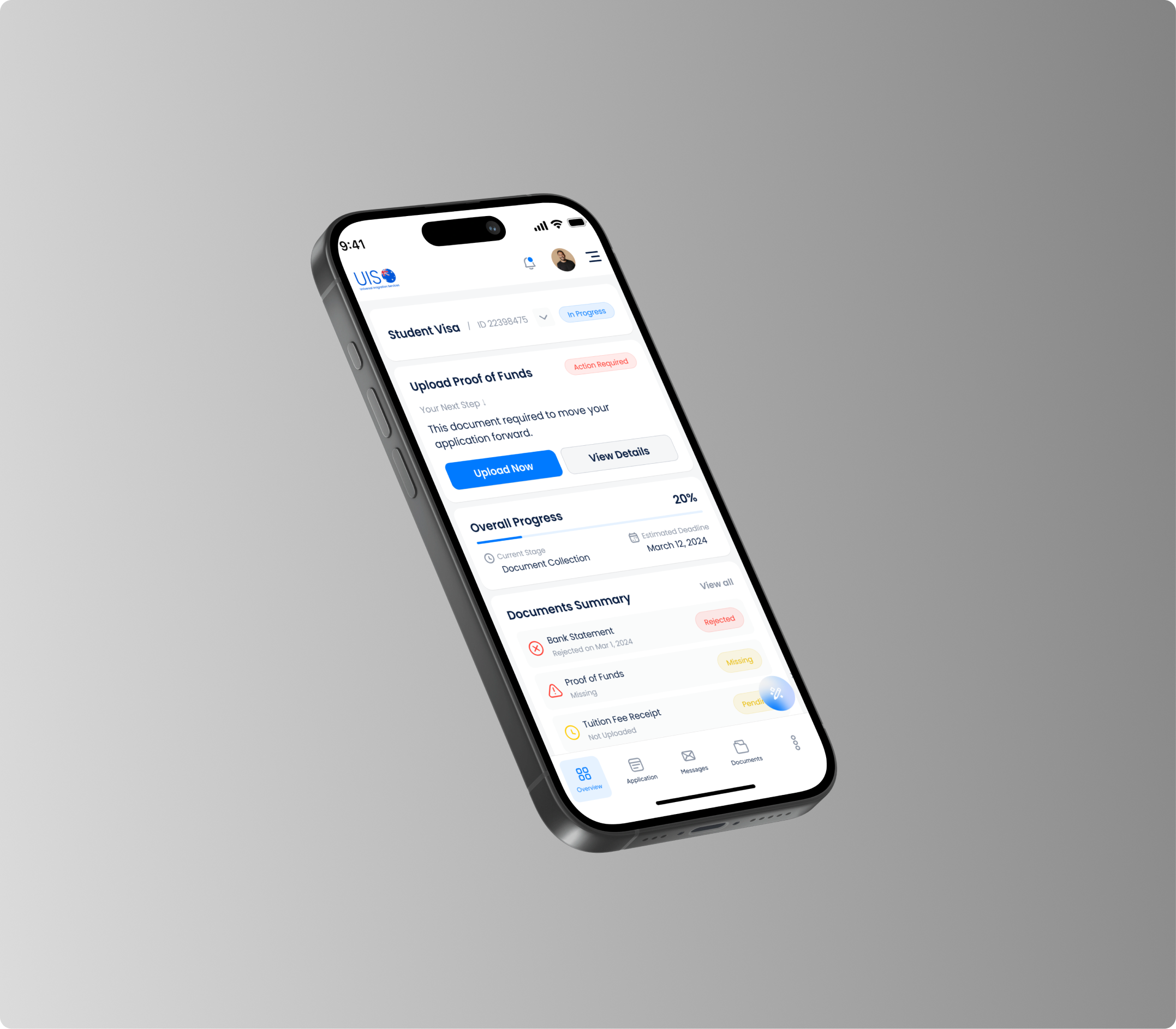
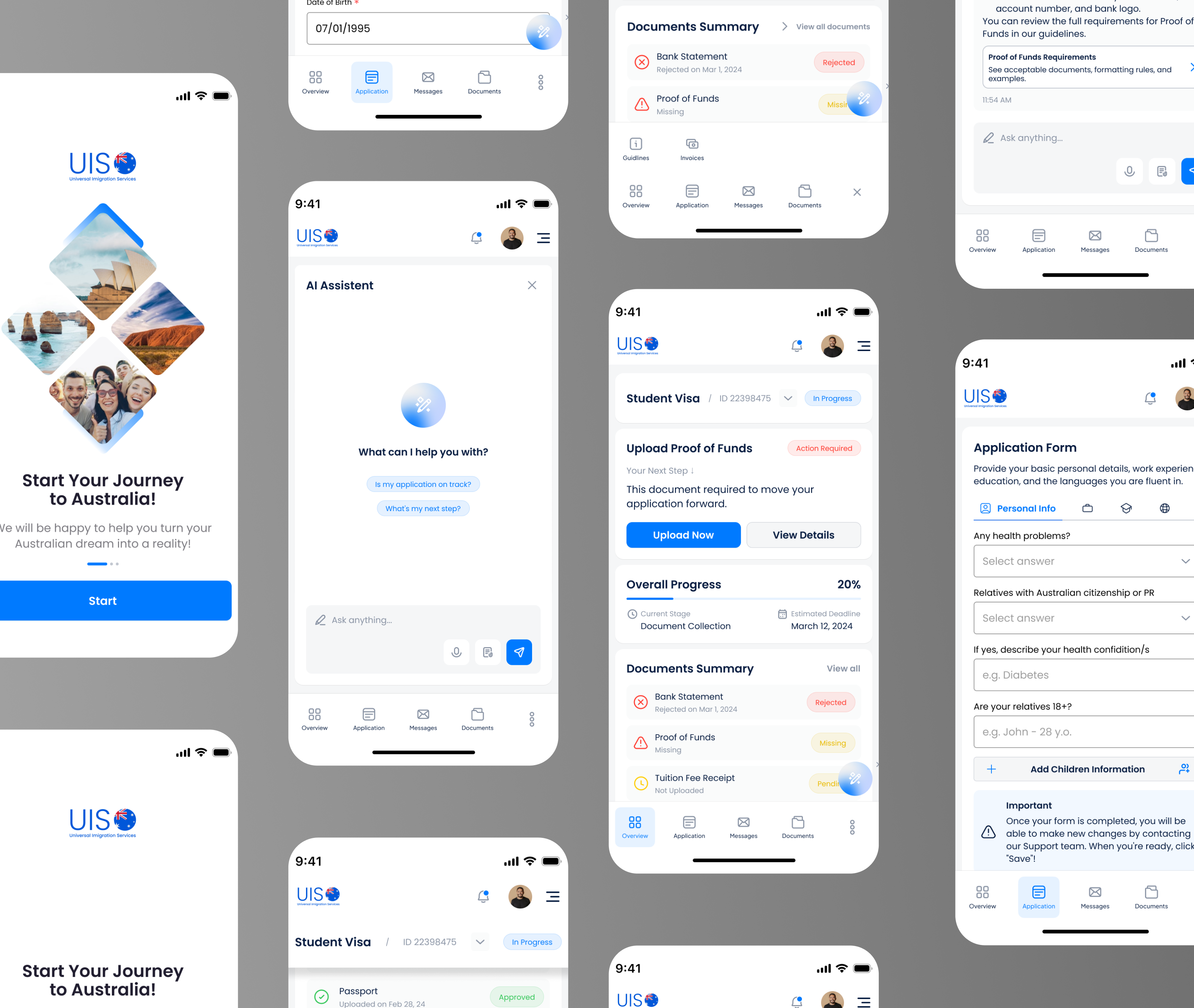
Adapting the application journey to mobile
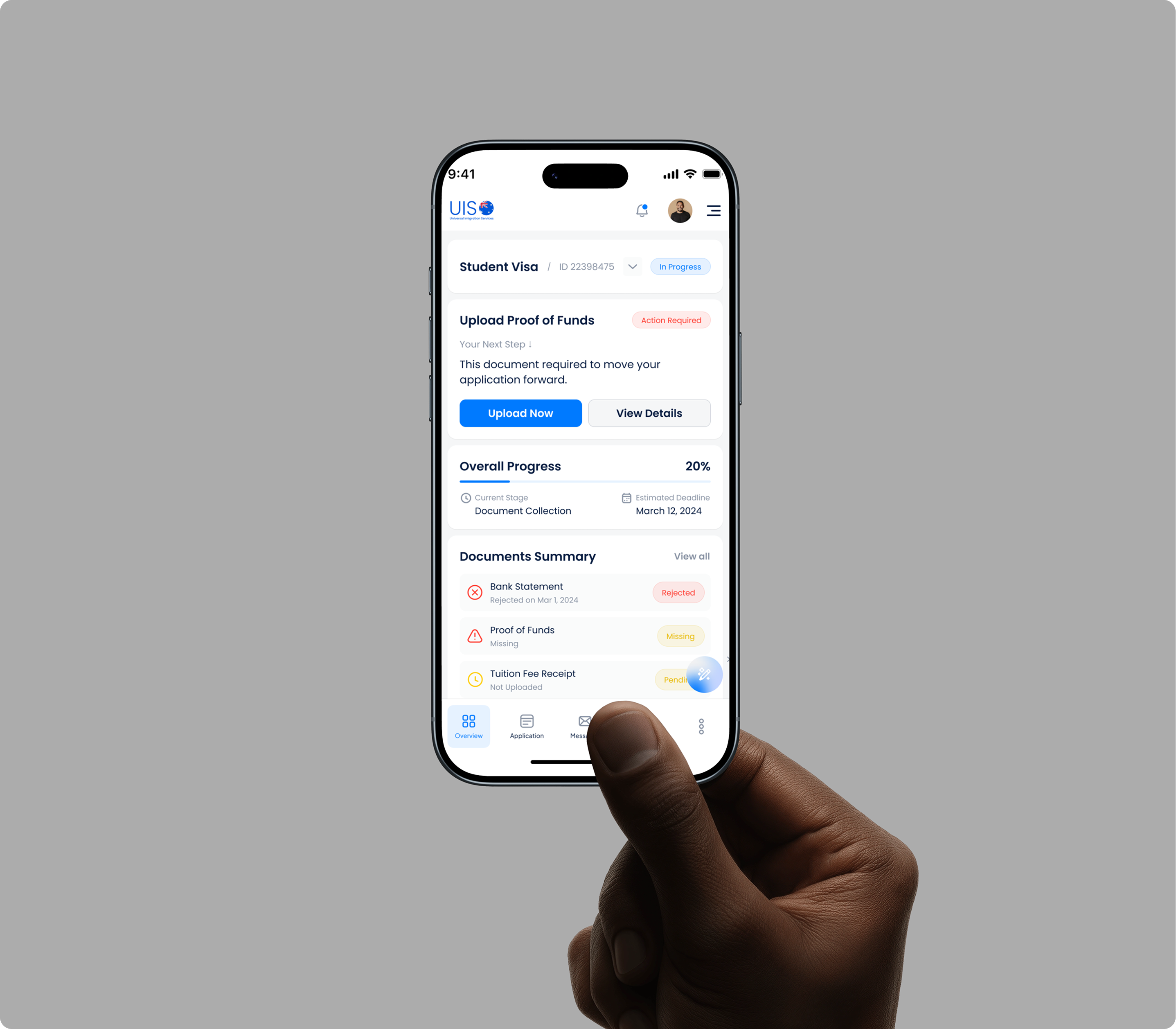
The responsive experience preserves the most important tasks and information while adapting the navigation and content hierarchy for smaller screens. The mobile dashboard prioritizes application status, required actions, documents, messages, and AI assistance without overwhelming the user.
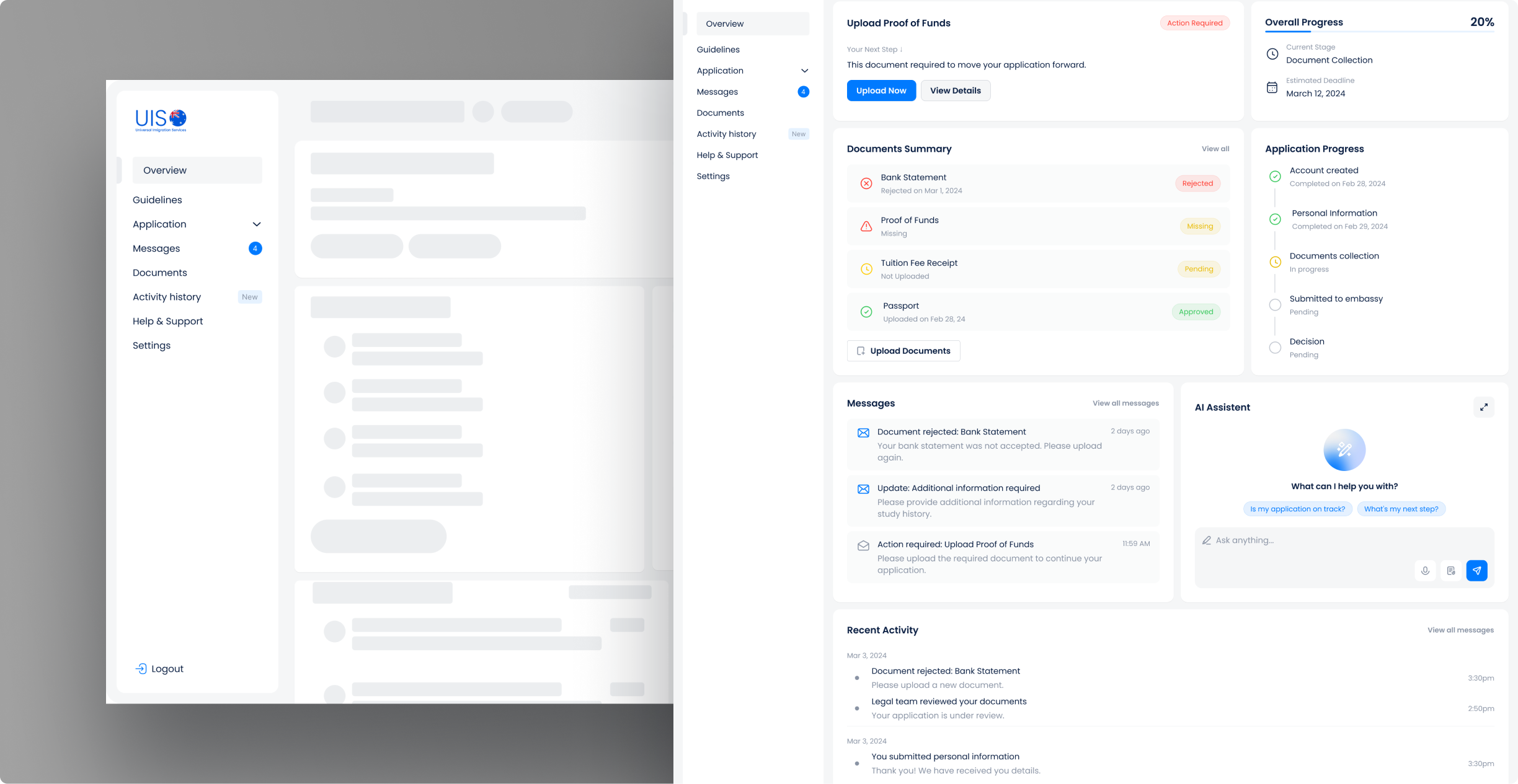
One place to understand what needs attention
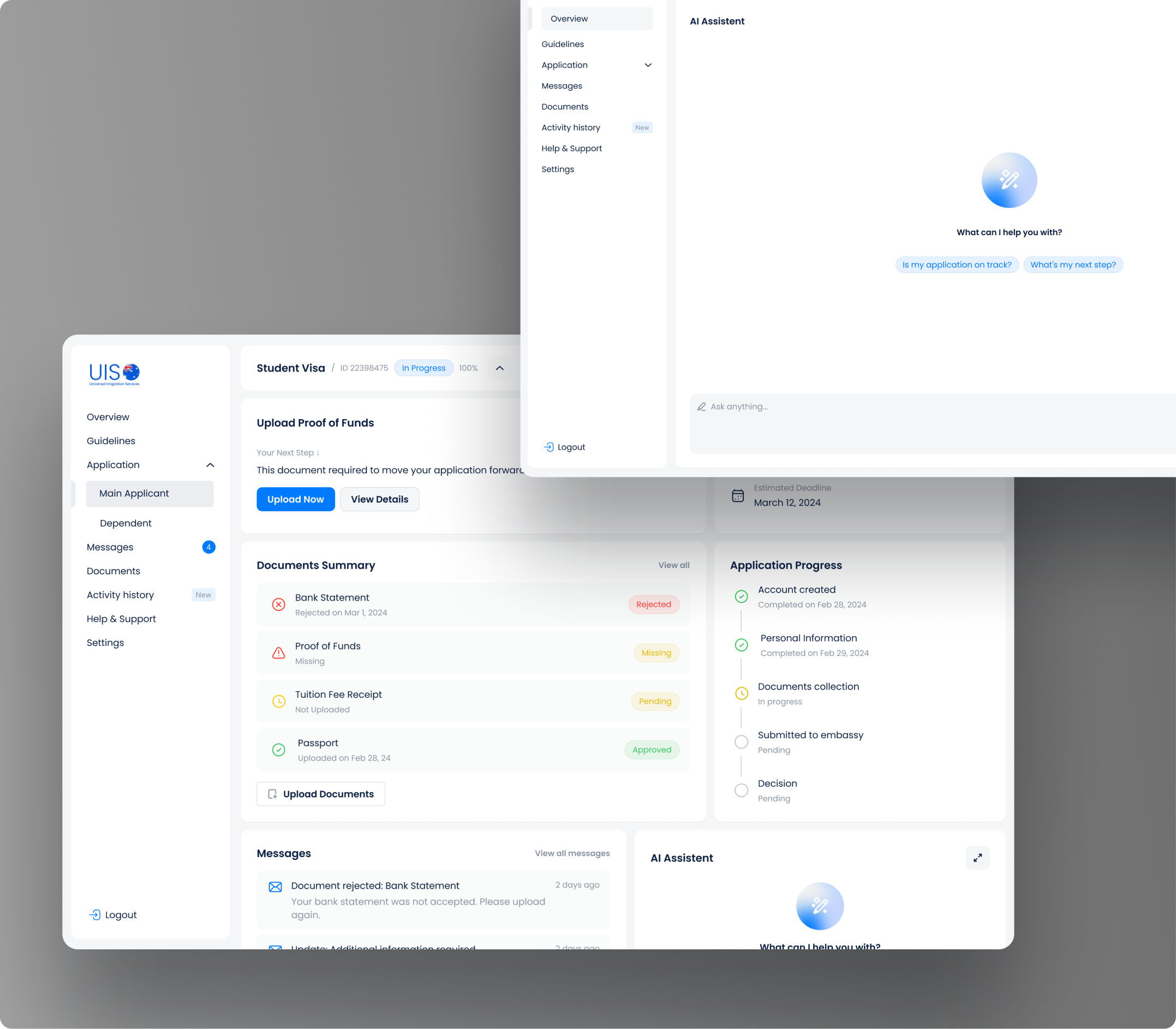
The dashboard gives clients an immediate overview of their application status, outstanding actions, documents, messages, and recent activity. Important actions are surfaced first, while progress indicators help users understand where they are in the overall process and what needs to happen next.
A layered support experience
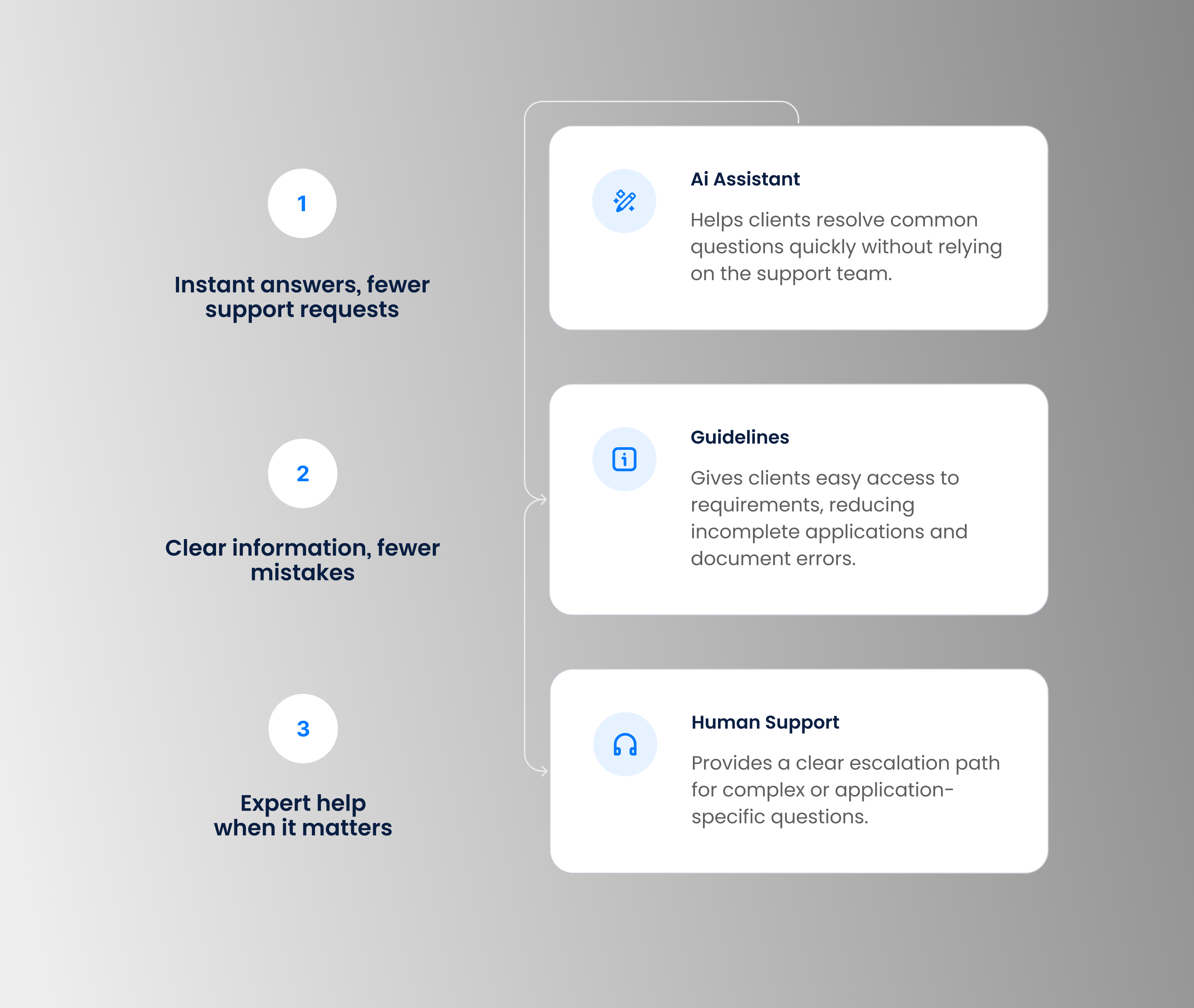
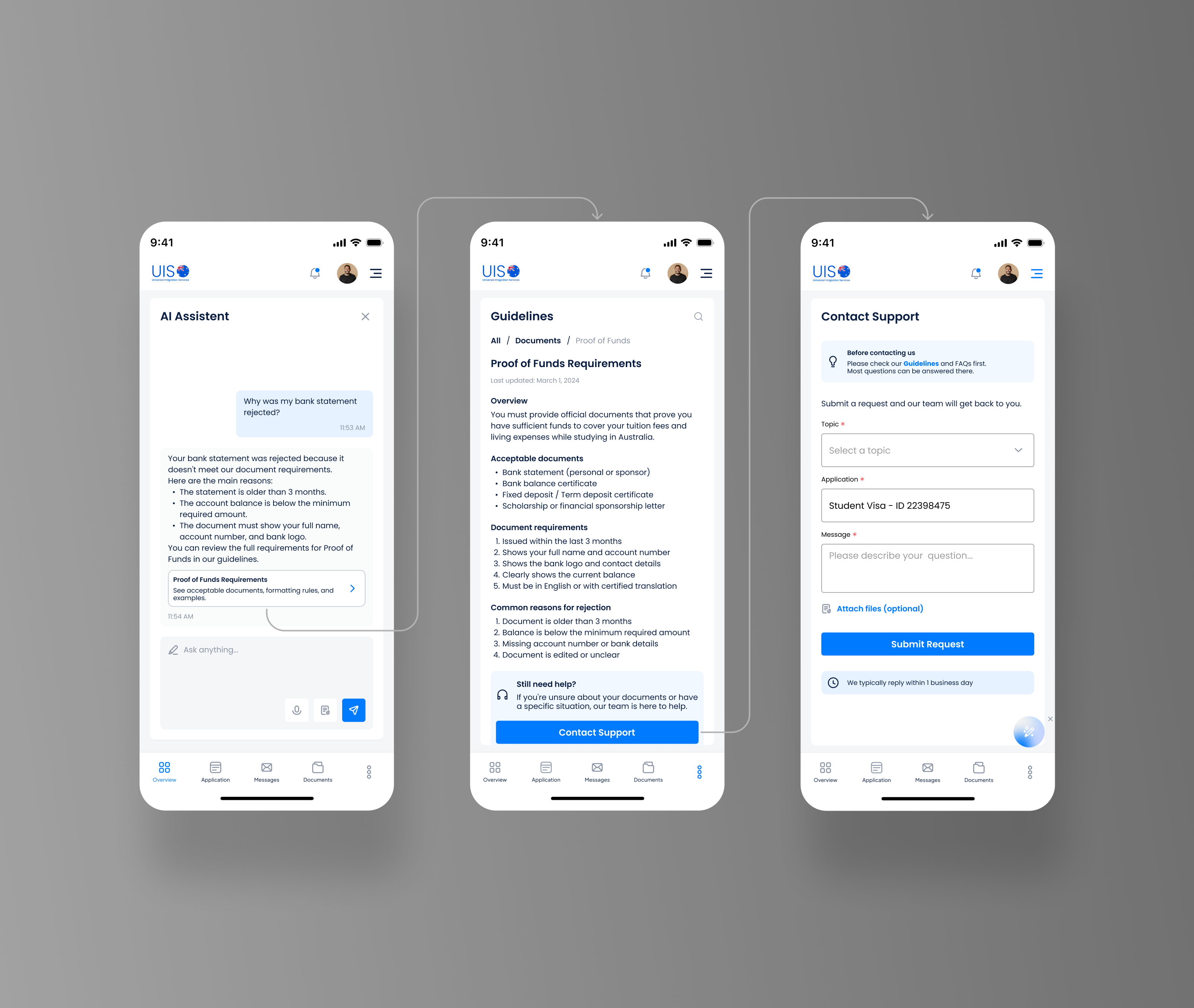
The platform combines AI assistance, self-service guidelines, and human support to help clients get the right level of help at each stage. This reduces repetitive support requests, prevents avoidable application errors, and allows the team to focus on more complex cases.
A clearer, more scalable experience
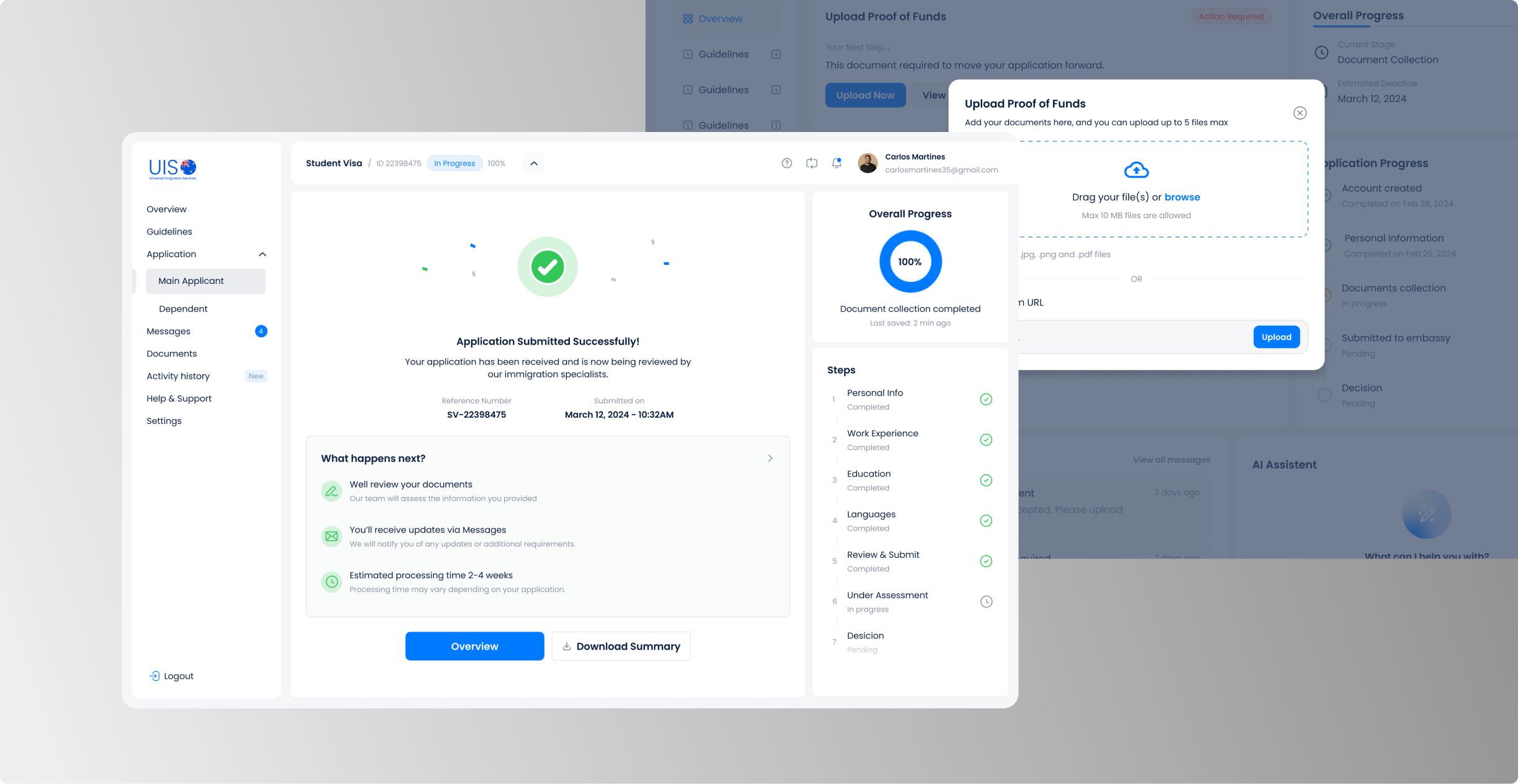
The redesigned platform brings application management, document collection, progress tracking, communication, payments, and support into one connected experience. By making the next step clear and giving clients more visibility and self-service options, the platform can reduce friction for applicants while helping the immigration team manage applications more efficiently.
(Next Project)
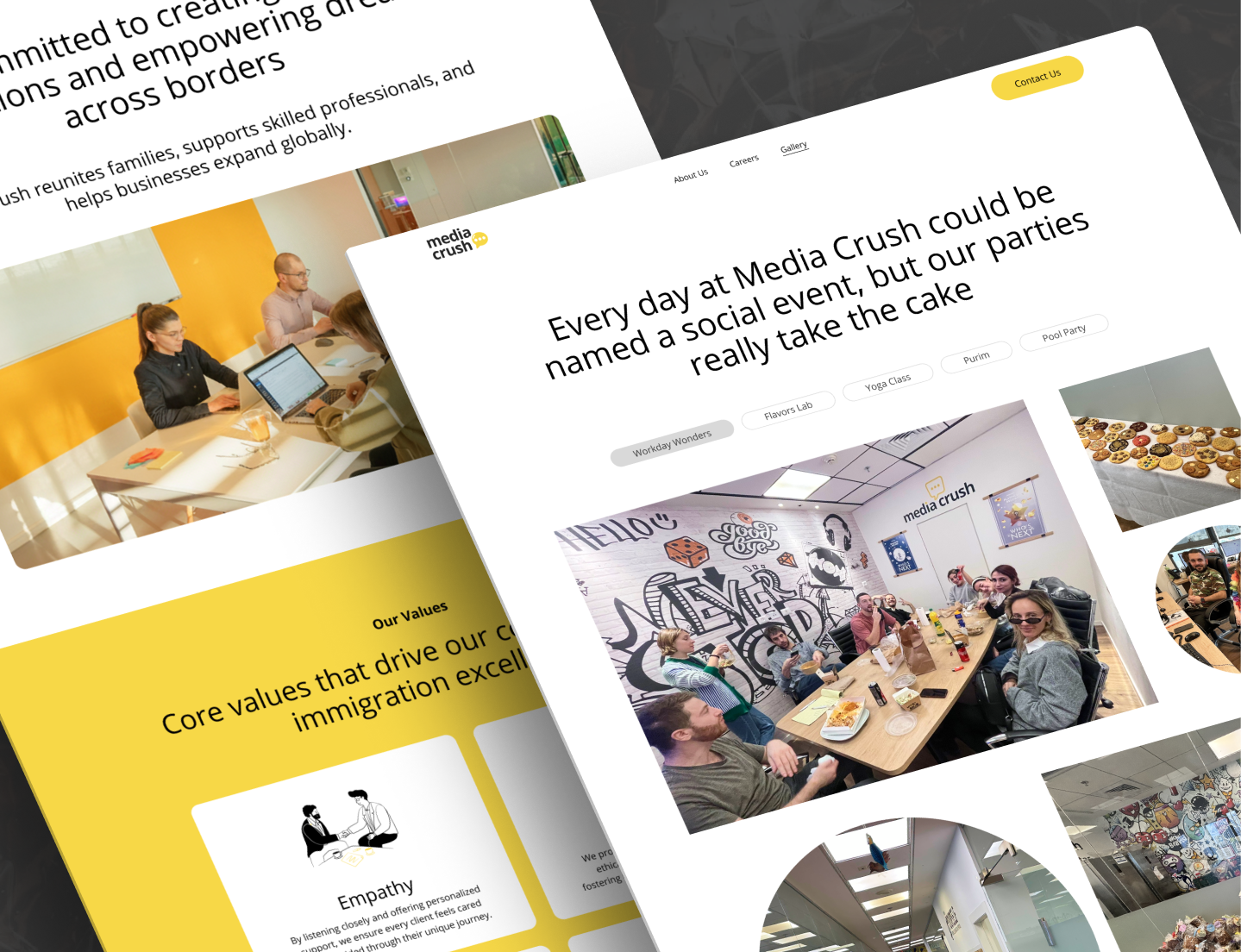
Media Crush
(Product Design, Web App, Design System)
UIS Visa app
role
Product Designer
deliverables
UX/UI Design · Responsive Web App · User Flows · Information Architecture Dashboard · AI Assistant · Design System
A digital visa application platform designed to simplify the Australian immigration journey.
The chalenge
The goal was to create a centralized visa application platform that makes a complex immigration process easier to understand and manage. Clients needed a simple way to complete forms, upload and track documents, and stay informed about their application without missing important requirements.
For the company, the platform aimed to reduce manual communication, minimize incomplete submissions, and give the team better visibility into each application.
Structuring
the experience
The experience was structured around the key stages of the visa process, from completing an application and submitting documents to tracking progress, receiving updates, making payments, and getting support. The information architecture keeps the dashboard as the central point of orientation while connecting each task to a clear destination.
Turning complex requirements into manageable steps
The application experience breaks a large visa form into clear sections for personal information, work experience, education, languages, and documents. Progress indicators and structured navigation make it easy to understand what information is required, what has been completed, and what remains before submission.
Adapting the application journey to mobile
The responsive experience preserves the most important tasks and information while adapting the navigation and content hierarchy for smaller screens. The mobile dashboard prioritizes application status, required actions, documents, messages, and AI assistance without overwhelming the user.
One place to understand what needs attention
The dashboard gives clients an immediate overview of their application status, outstanding actions, documents, messages, and recent activity. Important actions are surfaced first, while progress indicators help users understand where they are in the overall process and what needs to happen next.
A layered support experience
The platform combines AI assistance, self-service guidelines, and human support to help clients get the right level of help at each stage. This reduces repetitive support requests, prevents avoidable application errors, and allows the team to focus on more complex cases.
A clearer, more scalable experience
The redesigned platform brings application management, document collection, progress tracking, communication, payments, and support into one connected experience. By making the next step clear and giving clients more visibility and self-service options, the platform can reduce friction for applicants while helping the immigration team manage applications more efficiently.
(Next Project)
Media Crush
(Product Design, Web App, Design System)
UIS Visa app
role
Product Designer
deliverables
UX/UI Design · Responsive Web App · User Flows · Information Architecture Dashboard · AI Assistant · Design System
A digital visa application platform designed to simplify the Australian immigration journey.
The chalenge
The goal was to create a centralized visa application platform that makes a complex immigration process easier to understand and manage. Clients needed a simple way to complete forms, upload and track documents, and stay informed about their application without missing important requirements.
For the company, the platform aimed to reduce manual communication, minimize incomplete submissions, and give the team better visibility into each application.
Structuring
the experience
The experience was structured around the key stages of the visa process, from completing an application and submitting documents to tracking progress, receiving updates, making payments, and getting support. The information architecture keeps the dashboard as the central point of orientation while connecting each task to a clear destination.
Turning complex requirements into manageable steps
The application experience breaks a large visa form into clear sections for personal information, work experience, education, languages, and documents. Progress indicators and structured navigation make it easy to understand what information is required, what has been completed, and what remains before submission.
Adapting the application journey to mobile
The responsive experience preserves the most important tasks and information while adapting the navigation and content hierarchy for smaller screens. The mobile dashboard prioritizes application status, required actions, documents, messages, and AI assistance without overwhelming the user.
One place to understand what needs attention
The dashboard gives clients an immediate overview of their application status, outstanding actions, documents, messages, and recent activity. Important actions are surfaced first, while progress indicators help users understand where they are in the overall process and what needs to happen next.
A layered support experience
The platform combines AI assistance, self-service guidelines, and human support to help clients get the right level of help at each stage. This reduces repetitive support requests, prevents avoidable application errors, and allows the team to focus on more complex cases.
A clearer, more scalable experience
The redesigned platform brings application management, document collection, progress tracking, communication, payments, and support into one connected experience. By making the next step clear and giving clients more visibility and self-service options, the platform can reduce friction for applicants while helping the immigration team manage applications more efficiently.
(Next Project)
Media Crush
(Product Design, Web App, Design System)